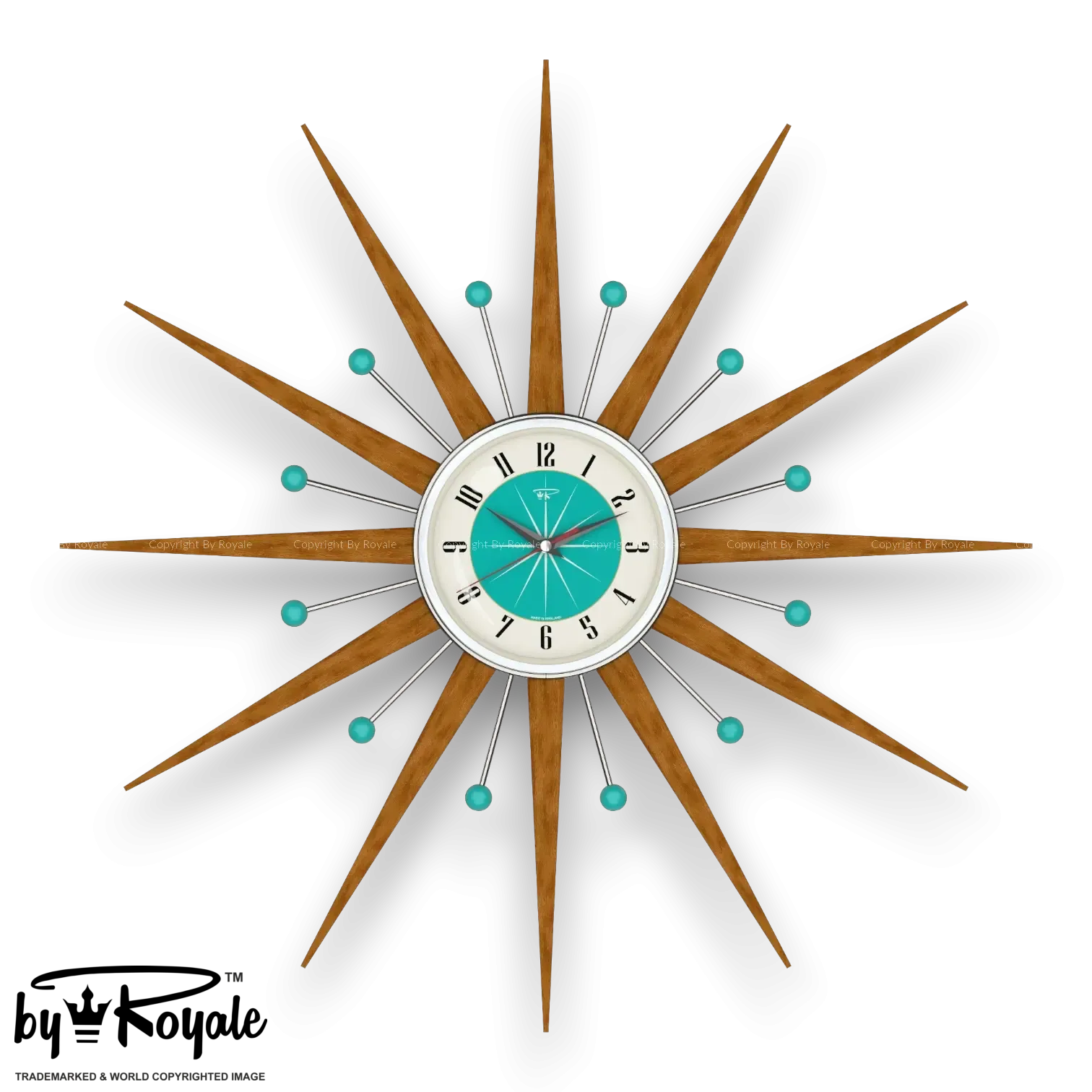


If you have ever stood in front of a teak sideboard, a starburst clock or a sculptural lamp and wondered what dates are mid century modern, the short answer is this: most designers, dealers and interiors specialists place it roughly between the mid-1940s and the late 1960s, sometimes stretching into the early 1970s. The longer answer is more useful, because mid-century modern is not just a date range. It is a distinct design language and getting the timing right helps you decorate with far more confidence.
For anyone building a home with genuine retro charm, the dates matter. They help separate true mid-century influence from later vintage, kitsch revival or generic "retro" styling. That difference shows up in everything from furniture silhouettes to the colours and materials that make a room feel considered rather than themed.
What dates are mid century modern exactly?
The term usually refers to design produced from around 1945 to 1969. Some historians widen that bracket to 1933-1965, while others extend it to about 1975 to account for how styles evolved in real homes rather than ending neatly with a calendar year.
If you want the most practical working definition, think of mid-century modern as the post-war design movement that flourished from the late 1940s through the 1960s. In interiors, that is the safest and most widely accepted window.
There is a reason the dates are debated. "Mid-century" sounds as though it should simply mean the middle of the twentieth century, but "mid-century modern" is a style label applied retrospectively. People at the time were not all using that term while furnishing their homes. As a result, the movement has softer edges than a named art period with official start and end points.
Why the date range is not perfectly fixed
Design does not switch on overnight. Trends move through architecture, manufacturing, magazines and domestic interiors at different speeds. A chair designed in 1956 could still feel current in a 1968 lounge and a home updated in 1972 might still feature clearly mid-century forms.
Geography matters too. American, Scandinavian, British and European interpretations overlapped but they did not develop in precisely the same way. British interiors, for example, often blended utility, warmth and modernist lines in a way that feels slightly different from the more expansive American look.
That is why asking what dates are mid century modern is only half the question. The other half is asking what visual traits belong to the style.
The design features that define the era
Mid-century modern interiors tend to favour clean lines, practical forms and a strong relationship between function and beauty. Pieces are often streamlined, but not cold. There is usually warmth in the timber, optimism in the colour palette and a sense that everyday objects should still feel sculptural.
You will often see walnut, teak, rosewood veneer, brass, glass, fibreglass, laminate and ceramic. Shapes range from tapered legs and rounded corners to angular frames, a Boomerang Wall Clock By Royale and atomic-era starbursts. Lighting and clocks became especially expressive during this period, turning useful household items into statement pieces.
Colour is another clue. Burnt Gold, Avocado, Black, White, Cream, Walnut Brown and vivid accent tones all sit comfortably within the mid-century palette. That does not mean every authentic room was bold, plenty were restrained. The point is balance - crisp structure softened by rich material and carefully chosen colour.
A quick timeline of mid-century modern style
The late 1940s mark the early post-war shift. Homes and products began embracing cleaner lines, lighter forms and a more forward-looking spirit. Utility still mattered, but there was growing appetite for design that felt modern rather than purely practical.
The 1950s are what many people picture first. This was the decade of optimism, experimentation and accessible modern living. Furniture became sleeker, decorative motifs became more playful and homes started reflecting a lighter, more curated sensibility.
The 1960s pushed the look further. Silhouettes could become bolder, colours stronger and materials more experimental. By the end of the decade, some interiors began moving towards space-age, pop and early seventies styling, which is where the boundaries start to blur.
The early 1970s can still overlap with late mid-century modern, especially in decorative objects and lighting. But as schemes became shaggier, heavier and more earthy, the classic mid-century feel began giving way to other directions.
Mid-century modern vs retro vs vintage
This is where many interiors go off course. Not everything old is mid-century modern, and not everything inspired by the 1950s or 1960s belongs to the style.
Vintage simply means from a past era. Retro usually means newer pieces inspired by older design. Mid-century modern is more specific. It refers to a recognised design movement with characteristic forms, materials and proportions.
A 1980s reproduction cocktail cabinet may look vaguely vintage, but it is not mid-century modern. Equally, a brand-new handmade wall clock can still be convincingly mid-century in style if it respects the design principles of the era rather than copying trends loosely. For buyers who care about authenticity of look, that distinction matters more than a strict obsession with age.
How to tell if a piece feels genuinely mid-century
Start with shape. Mid-century modern pieces tend to be elegant and economical, with very little visual fuss. Legs are often tapered, profiles are balanced and ornament is usually integrated into the form rather than stuck on afterwards.
Then look at materials and finish. Teak tones, walnut hues, brass details, laminate surfaces and well-judged pops of colour all sit naturally in the period. If something feels overly distressed, excessively ornate or bulky without purpose, it may belong to another style altogether.
Scale is useful too. Mid-century design often works beautifully because it gives objects presence without heaviness. A Starburst Clock By Royale, for instance, can command a wall while still keeping the room airy. That is one reason these pieces remain such favourites in contemporary homes.
Does mid-century modern have to be antique?
Not at all. If your aim is to create a home with timeless retro charm, you do not need every item to be an original from 1958. In fact, mixing original vintage finds with well-made contemporary pieces is often the smartest approach.
Original furniture can bring character and collector appeal, but it may also require restoration, careful sourcing and patience. New pieces inspired by the era offer another route - especially when they are made with a clear understanding of proportion, material and finish. That is often the difference between a room that feels design-led and one that feels like a film set.
For decorative accessories, this balance works especially well. A handcrafted statement clock, lamp or piece of wall art can anchor the look without forcing you into a full period scheme. It lets you nod to the era while still keeping the space personal.
How to use the era well in a modern home
The best mid-century interiors today are not museum replicas. They borrow the clarity, warmth and visual confidence of the period, then adapt it to contemporary living.
That might mean pairing a walnut-toned wall clock with neutral walls and modern upholstery. It might mean introducing an Atomic style Lamp By Royale while keeping the rest of the room pared back or it might mean using classic mid-century colourways to bring warmth into a newer property that needs character.
Restraint usually helps. Because the era has such recognisable motifs, a few strong pieces will often do more than a room full of obvious references. One exceptional item with heirloom quality can elevate your space far more effectively than several generic accessories.
For that reason, many design-conscious buyers choose statement décor over mass-produced fillers. A made-to-order piece with the right silhouette and finish does not just reference the period - it gives the room focus.
So, what dates are mid century modern when you are shopping?
If you are buying vintage, look primarily at pieces from about 1945 to 1969, with some flexibility either side depending on the design. If you are buying contemporary home décor, focus less on the manufacturing date and more on whether the styling is faithful to the era.
Ask whether the piece captures the key qualities: clean lines, balanced form, purposeful detail, warm materials and unmistakable mid-century character. Those are the signs that matter in a finished interior.
At By Royale, that understanding sits at the heart of good retro-inspired design. The most successful pieces are not simply old-fashioned. They are visually precise, beautifully made and confident enough to stand out.
If you remember one thing, let it be this: mid-century modern belongs broadly to the late 1940s, the 1950s and the 1960s but the real magic is in how those decades still shape rooms that feel fresh, stylish and entirely your own.